
Keep up-to-date with the latest IP insights and updates as well as upcoming webinars and seminars via HLK’s LinkedIn page, or simply subscribe to our updates.
After more than a decade of anticipation and delays, Grand Theft Auto VI is finally due to launch on 19 November 2026. Widely expected to become one of the biggest entertainment releases of all time, GTA VI has reportedly cost upwards of US$1 billion [1] to develop and arrives at a time when the UK video games market alone is worth £8.76 billion [2].
Whilst much of the attention will focus on gameplay, graphics and Rockstar’s return to Vice City (a fictionalised version of Miami), GTA VI also provides a timely reminder of the immense value of intellectual property rights in the modern video games industry.
Today’s blockbuster video games have evolved from basic software products to become global brands built upon a sophisticated portfolio of trade marks, copyright, designs, patents and confidential know-how. For developers investing hundreds of millions into a title, securing robust IP protection can be critical to the commercial success of a video game.
Video games are not protected by a single IP right: instead, they comprise multiple assets, each potentially attracting its own legal protection, resulting in a bundle of rights.
A title such as Grand Theft Auto comprises a wide range of IP rights, from the game’s name and branding, the software code powering the gameplay, the artwork and graphics that create the game’s distinctive aesthetic, the soundtrack, the characters and the underlying technologies such as the game engine that make the game possible.
Each layer can have significant commercial value independently of the others.
For many publishers, the most recognisable asset is the brand itself.
Game titles, logos, studio names and character names should all be considered for trade mark protection. As franchises grow beyond gaming into merchandising, streaming content, film adaptations and live events, brand protection becomes increasingly valuable.
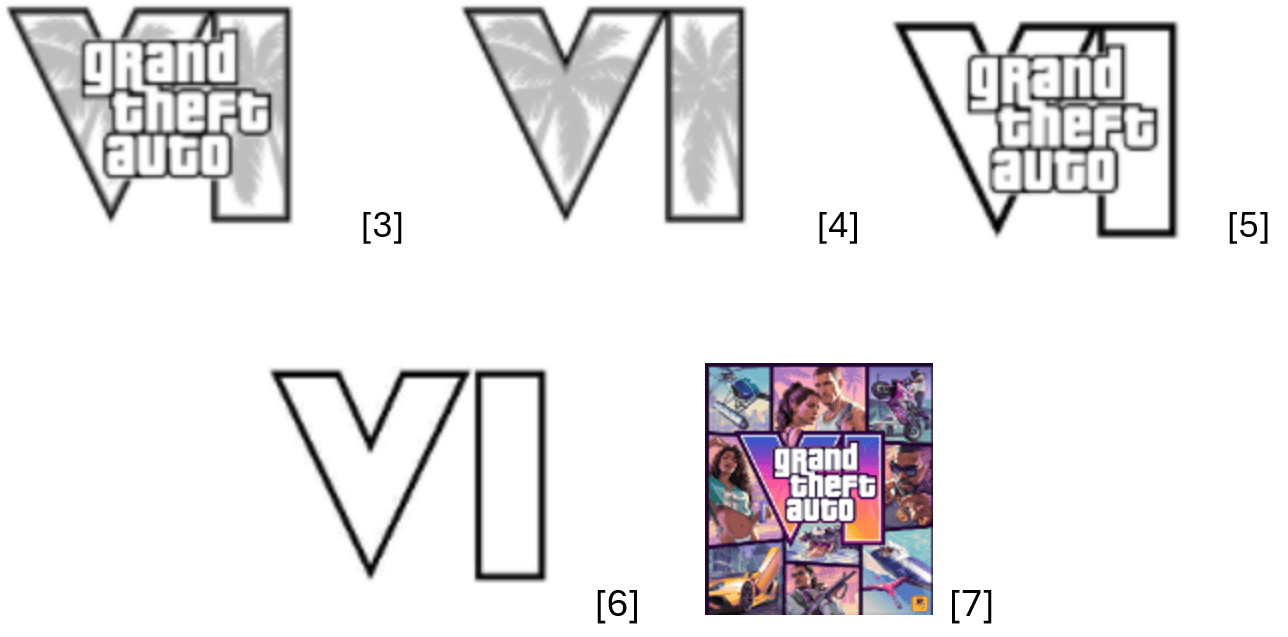
Rockstar’s parent company, Take-Two Interactive, recognised this long before GTA VI’s scheduled release. The company filed a series of UK trade mark applications for the GTA VI branding as early as March 2023, demonstrating how early trade mark protection can form a key part of a wider product launch strategy.
Copyright remains the cornerstone of legal protection for many video games. A single game, like GTA VI, will contain hundreds, or more likely thousands, of separate copyrighted works, including:
Whilst copyright arises automatically in jurisdictions like the United Kingdom or European Union, contrary to registered rights which must be applied for, ownership issues can quickly emerge where development is spread across employees, freelancers, contractors or external studios. Ensuring ownership is properly documented from the outset is often just as important as creating the work itself. This is particularly relevant as development of video games will generally involve teams that are spread out geographically across multiple legal jurisdictions.
Some gaming characters become cultural icons in their own right.
Characters such as Mario, Lara Croft and Sonic the Hedgehog have generated value far beyond the games in which they first appeared. They can be licensed for merchandise, films, television programmes and other commercial ventures.
For developers, this reinforces the importance of layered protection strategies that combine copyright, trade marks and, where appropriate, design rights.
Not every aspect of a video game is patentable, but genuine technical innovation may benefit from patent protection.
Take-Two Interactive has famously developed their in-house game engine, nicknamed “RAGE” (Rockstar Advanced Game Engine), and have filed US patent applications for systems to procedurally generate interiors of buildings [8] as well as systems to adapt character animation to the world in real time [9].
Other examples of patentable subject matter in video games may include:
As game developers increasingly incorporate advanced AI and immersive technologies into their products, patents are likely to become an ever more significant part of the industry’s IP strategy.
Visual appearance can be a key factor in commercial success. Registered designs can protect graphical user interfaces, in-game icons, character appearances and even gaming hardware, providing an additional layer of protection against copycats.
Another benefit of registered design protection is that, in the United Kingdom and European Union, applications to register designs are affordable and the time from application to registration is generally minimal.
Not every valuable asset can or should be registered and the most valuable assets in game development are often never made public. Source code, development tools, unreleased content and commercial strategies are frequently protected through confidentiality measures and trade secrets. For high-profile releases such as GTA VI, maintaining secrecy before launch can be almost as valuable as protecting the finished product itself.
From as early as 2022 [10] onwards, GTA VI’s development was plagued with several leaks which revealed substantial portions of the game years before Rockstar intended to make them public.
The days when video games were considered a niche form of entertainment are long gone. Today’s leading games are global entertainment brands with revenues that can exceed those of major film franchises.
As development budgets continue to grow and technological innovation accelerates, intellectual property portfolios have become some of the industry’s most valuable assets. A carefully considered IP strategy can help developers protect their creativity, defend their market position and maximise the commercial value of their investment.
The excitement surrounding the launch of GTA VI will focus on gameplay, graphics and storytelling. Behind the scenes, however, it also serves as a reminder that every successful video game is built upon a sophisticated and layered portfolio of intellectual property rights. For developers and publishers alike, protecting those rights remains just as important as creating the game itself.
For gaming businesses, identifying and protecting IP rights should not be an afterthought. From trade mark filings and copyright ownership arrangements to design registrations, patents and confidentiality measures, a proactive IP strategy can play a critical role in maximising the value of a game before long after its launch.
[2] https://ukie.org.uk/news/uk-video-games-market-reaches-8-76-billion-growing-7-4-in-2025
[3] https://trademarks.ipo.gov.uk/ipo-tmcase/page/Results/1/UK00003994177
[4] https://trademarks.ipo.gov.uk/ipo-tmcase/page/Results/1/UK00003994182
[5] https://trademarks.ipo.gov.uk/ipo-tmcase/page/Results/1/UK00003994187
[6] https://trademarks.ipo.gov.uk/ipo-tmcase/page/Results/1/UK00003994188
[7] https://trademarks.ipo.gov.uk/ipo-tmcase/page/Results/1/UK00004404868
[8] https://patents.google.com/patent/US10987587B2/en
This is for general information only and does not constitute legal advice. Should you require advice on this or any other topic then please contact hlk@hlk-ip.com or your usual HLK advisor.
Keep up-to-date with the latest IP insights and updates as well as upcoming webinars and seminars via HLK’s LinkedIn page, or simply subscribe to our updates.